Compare office workstation assembly quotes against the same item list,
layout and access arrangements before comparing totals. A lower figure
may cover fewer accessories, less handling or fewer visits. Ask each
provider to identify what is included, what remains your responsibility
and how changes will be agreed.
For office
furniture assembly and setup, the useful comparison is the cost of
completing your defined scope. A price “per workstation” means little
until both parties agree what that workstation contains.
Define what each workstation includes
Start with an inventory showing quantities, manufacturer, model and
product links or instructions. Distinguish fixed desks, adjustable
desks, bench systems and corner units. Count chairs, pedestals and
storage separately, even when they were purchased as a package.
For example, “six workstations” might mean six desk frames and tops,
or six desks with chairs, screens, drawer units and monitor arms.
These are different scopes. Use one row per product or clearly
defined group, and identify anything delivered partly assembled.
 The number of desks is only one part of the specification.
Add the intended room and final position for each item. Include a
simple layout with dimensions and any shared screens or linked
bench components. Ask whether positioning and the agreed furniture
checks are included, rather than assuming “assembly” covers every
step to an operational office.
Use the same scope checklist for every quote
Mark each line as included, excluded or awaiting clarification.
An unanswered line is an uncertainty, not a zero-cost item. Keep
optional additions separate so a complete offer can be compared
with another complete offer.
Swipe horizontally to read all columns.
Questions to put alongside each provider's total
| Scope item |
What to specify |
What to confirm |
| Furniture |
Quantity, model and delivered condition |
Every listed item is covered. |
| Accessories |
Screens, monitor arms, drawers and cable trays |
Fitting is included or separately priced. |
| Handling |
Delivery location and final room |
Who moves packages and finished items. |
| Attendance |
Working hours, phases and access windows |
Visits and any timing assumptions. |
| Packaging |
Collection point and removal requirement |
Stacking on site or taking away. |
| Completion |
Positioning, checks and outstanding-item record |
What counts as the agreed handover. |
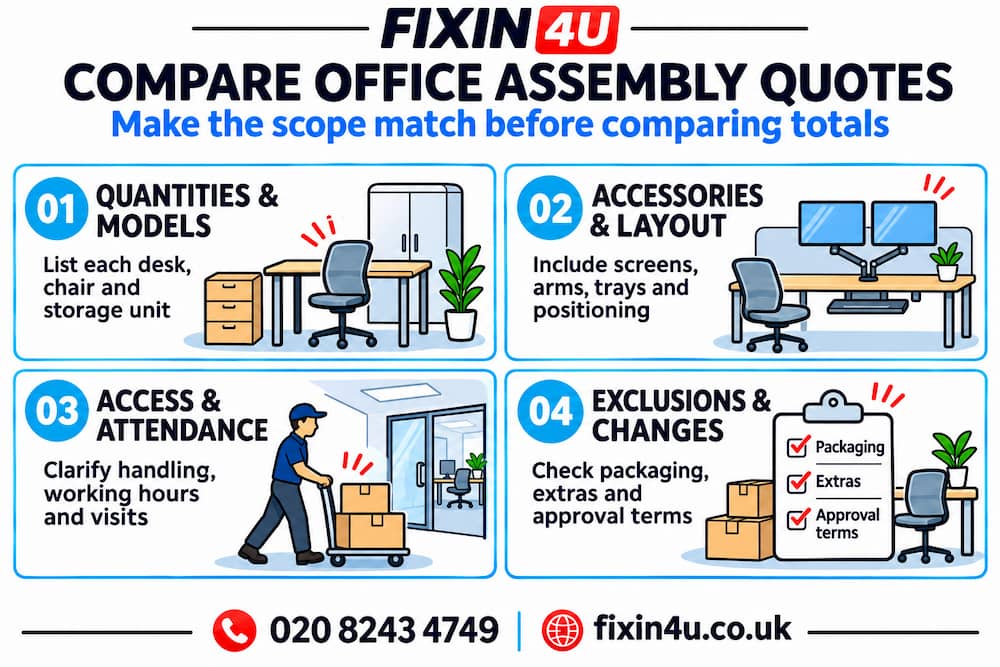 Match the work covered before comparing the quoted totals.
Make accessory and related tasks explicit
Desktronic publishes separate guides for desks and accessories such
as monitor arms, drawers and cable trays. This illustrates why the
main desk model alone may not describe all the assembly work.
Supply the actual instructions for your products; do not use another
model's guide as a substitute.
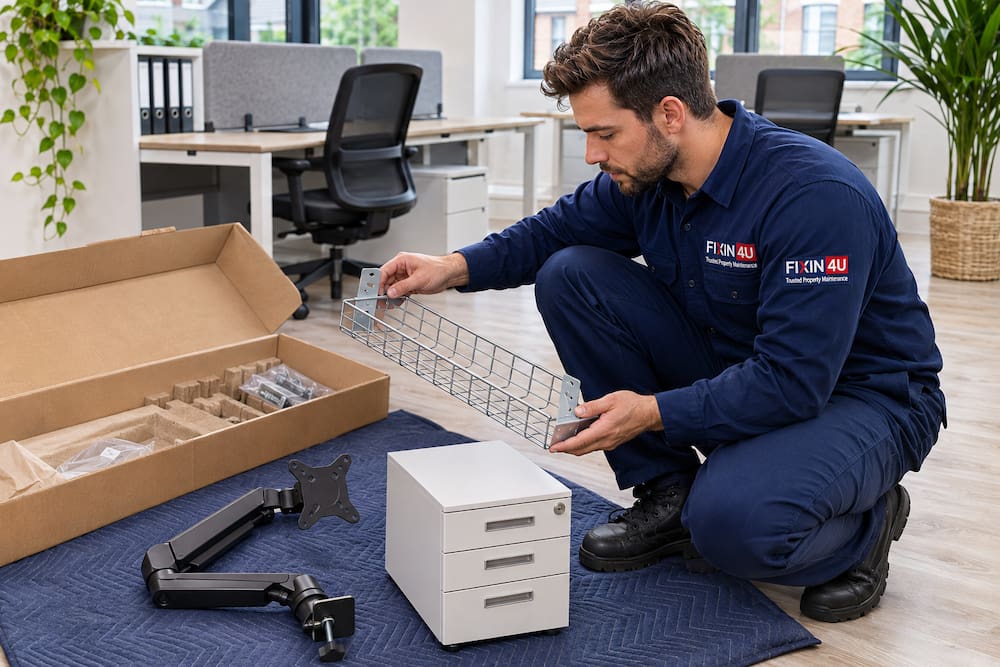 Accessories should appear in the inventory rather than remain an assumption.
Separate furniture assembly from computer installation, network
configuration and electrical alterations. If cable management is
requested, describe whether this means fitting empty trays, arranging
existing leads or another defined task. Confirm responsibility for
each activity.
Likewise, furniture handover does not replace the employer's
workstation assessment process. HSE guidance covers the whole
workstation and identifies new or changed workstations as assessment
triggers for relevant DSE users. Avoid treating a general “ready to
use” phrase as confirmation that every related task is included.
Give the same access and site information
State where deliveries will be left, the floor level, stairs or lift
arrangements, loading restrictions and the available assembly area.
Explain whether the rooms are occupied and whether work must be
completed in phases. These details can change the handling and
attendance a provider needs to allow for.
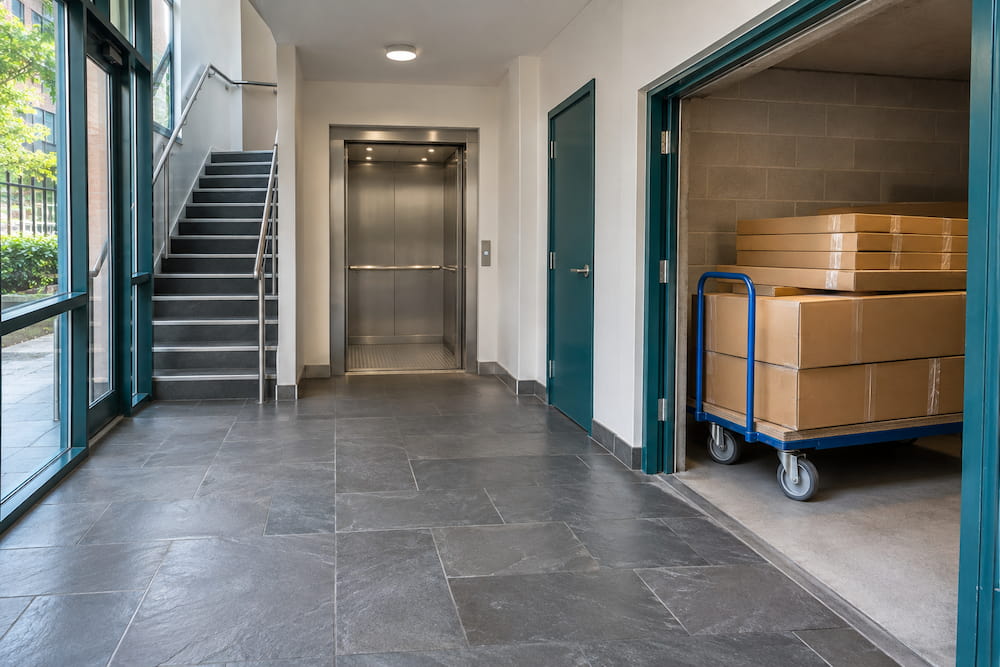 Identify the route from delivery point to assembly room before requesting a price.
Clarify who receives deliveries and checks that all packages are
present. Ask how the proposal changes if access is unavailable or
a delivery is incomplete. Do not assume a second visit is included
because the original furniture list has not changed.
Agree what happens to packaging. Folding cartons and leaving them
at your collection point is different from removing them from the
premises. Existing furniture removal, disassembly and storage are
also separate tasks unless expressly included.
 On-site tidying and removal from the building are different scope items.
Clarify the pricing basis and change process
Ask whether the amount is a fixed quotation for the listed work or
an estimate based on stated assumptions. For time-based work,
confirm the charging unit, how crew size affects the charge and
any minimum attendance. Check whether VAT, travel, parking or
other stated charges are included or additional, where applicable.
A fixed total still needs a clear scope. Ask which circumstances
could change it and how approval will be obtained before additional
work. For an estimate, ask what information would reduce uncertainty
and how progress against the allowance will be communicated.
Confirm payment stages, quote validity, cancellation or rescheduling
terms and the process for reporting an assembly issue. Keep
supplied-product defects distinct from assembly workmanship, and
ask how missing or damaged parts will be recorded and left pending.
Resolve differences before choosing
Suppose one offer includes desks, chairs, accessories and packaging
removal, while another lists desk assembly only. The totals are not
yet comparable. Ask for the omitted tasks to be priced or confirm
that your team will undertake them; do not invent an allowance and
present it as the provider's price.
Send the same clarified inventory to each provider and request a
revised written scope. Compare the resulting total, remaining
responsibilities and unresolved dependencies together. The clearest
offer is the one that lets you see what will be delivered and what
still needs arranging.
“Please quote against the attached inventory and layout. Identify
included assembly, accessory fitting, handling, positioning,
packaging arrangements and visits. State exclusions, the pricing
basis and how additional work requires approval.”
References & Standards
Use the instructions supplied for the actual furniture and the
workplace's own assessment arrangements. These sources do not
establish an assembly price.